
Gel polish top coats play an important role in the final appearance, durability, and performance of a manicure. For nail salons, distributors, wholesalers, and nail brands, choosing the right top coat is not just about shine. It also involves understanding the finish, application experience, compatibility, and intended use of each product.
Different top coats can create glossy, matte, glass-like, or specially reinforced finishes. Understanding these differences helps buyers build a more suitable product range and make better purchasing decisions.
1. Why Does Choosing the Right Gel Polish Top Coat Matter?
A top coat is the finishing layer applied over gel polish or nail art. Depending on its formulation, it can influence the final shine, surface appearance, scratch resistance, and overall look of a manicure.
For professional buyers, the right top coat should meet the needs of the target market. A salon serving customers who prefer high-gloss nails may prioritize a different product from a salon specializing in matte nail art or detailed decorative designs.
When comparing products, buyers should consider:
Finish: Glossy, matte, or a specialized surface effect.
Application: Smooth spreading, suitable viscosity, and convenient brush control.
Curing performance: Compatibility with the recommended curing lamp and instructions.
Wear performance: Resistance to everyday surface wear and loss of shine.
Compatibility: Performance when used with the intended gel polish system.
Packaging and consistency: Reliable packaging and consistent performance across batches.
No single top coat is ideal for every manicure. The best choice depends on the desired result and how the product will be used.
2. Compare Six Common Types of Gel Polish Top Coats
Different manufacturers may use different product names for similar finishes. Buyers should therefore compare the actual product specifications and test results rather than relying on the name alone.
Matte Top Coat
A matte top coat transforms a glossy manicure into a softer, non-glossy finish. It is suitable for minimalist nail designs, modern color combinations, and nail art that benefits from a contrast between matte and glossy surfaces.
What buyers should check:
Whether the matte finish appears even across the nail.
Whether the surface develops unwanted shiny patches during normal wear.
Whether the texture works well with the intended nail art.
Whether the finish remains consistent after the recommended curing process.
Matte top coats can be a useful addition to a product range because they allow salons to create different looks using the same underlying gel polish colors.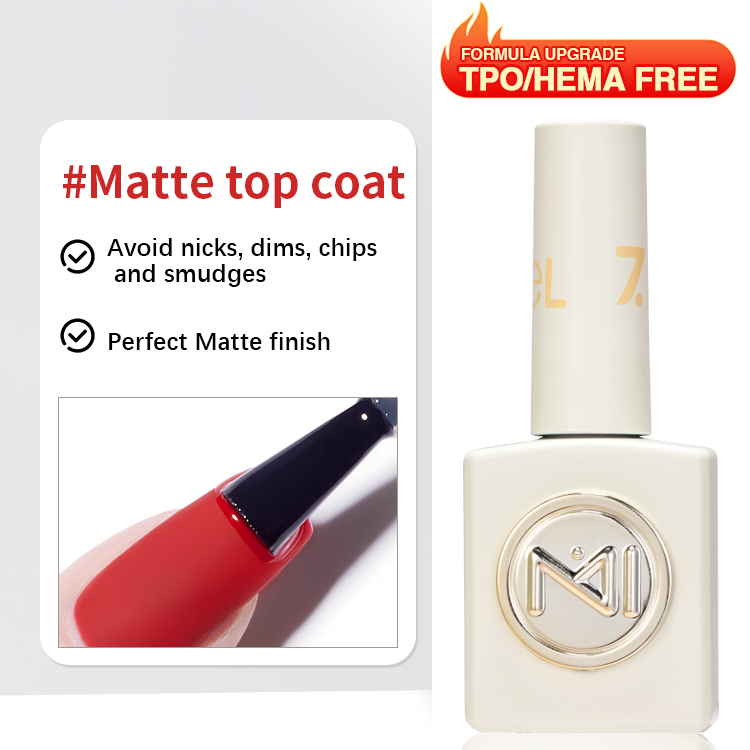
Diamond Shining Top Coat
A diamond-shine top coat is designed for a bright, reflective finish that emphasizes the appearance of the color underneath. It may be suitable for glitter designs, vibrant shades, and manicures where a noticeable glossy effect is desired.
What buyers should check:
The clarity and brightness of the finished surface.
Whether the top coat maintains the intended appearance over the underlying color or glitter.
Whether the application is smooth and even.
Whether the finish performs consistently under the recommended conditions.
The term “diamond shining” is a product name rather than a universal technical standard, so buyers should evaluate the actual finish through samples.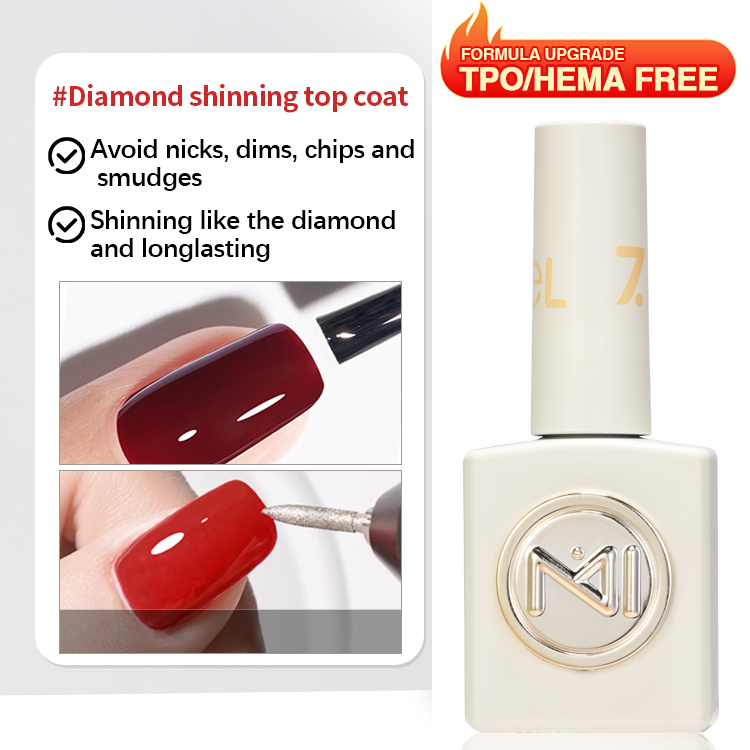
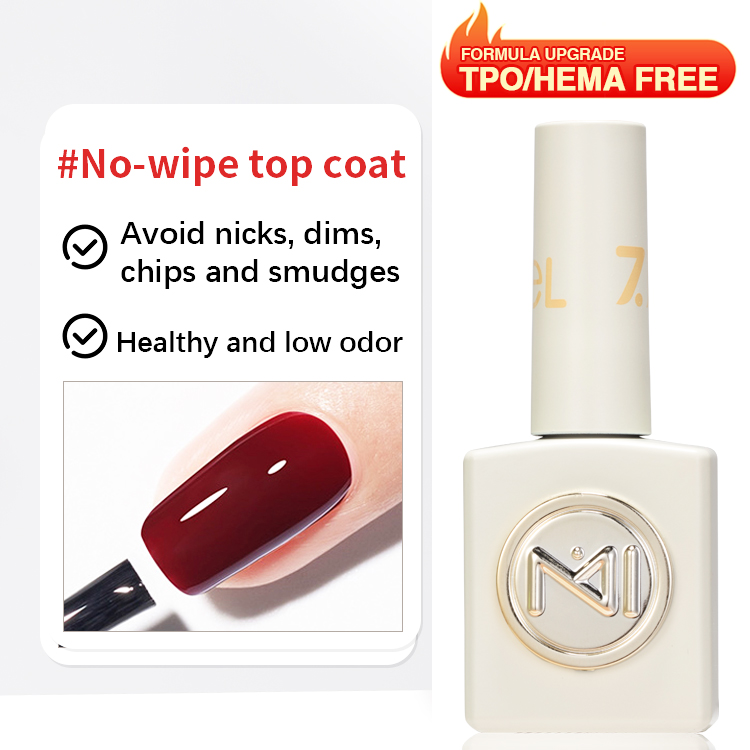
No-Wipe Top Coat
A no-wipe top coat is designed to leave a finished surface without requiring a separate cleansing step to remove a residual tacky layer, when properly cured according to the manufacturer's instructions.
It can help simplify salon workflows and is commonly considered for everyday gel polish services.
What buyers should check:
Whether the surface is properly cured with the recommended lamp.
Whether the finish is clear and glossy, if that is the intended result.
Whether the product works with the selected base color and gel system.
Whether the application instructions are clear and repeatable.
Curing results depend on the formulation, lamp compatibility, application thickness, and curing conditions. A no-wipe product should not be assumed to cure correctly with every lamp or under every condition.
No-Wipe Top Coat Pro
A product labeled “Pro” may be positioned for professional salon use or for a particular performance requirement. However, the word “Pro” does not have a universal technical definition across manufacturers.
Buyers should ask the manufacturer what distinguishes the Pro version from the standard no-wipe top coat.
Useful comparison points include:
Differences in viscosity and application feel.
Gloss retention and surface appearance.
Performance over different colors and nail art effects.
Compatibility with the intended gel polish system.
Recommended curing conditions and use instructions.
Comparing both products under the same conditions is the most reliable way to determine which version better suits a salon or distribution business.
Tempered Top Coat
A tempered top coat is a product name that may indicate a particular protective or reinforced finish, depending on the manufacturer's formulation. Buyers should confirm the intended performance rather than assuming that all products sold under this name have the same properties.
When evaluating a tempered top coat, consider:
Surface hardness or scratch-resistance claims supported by testing.
Whether the finish remains clear and visually consistent.
Compatibility with the intended gel polish and nail art.
Application feel and curing requirements.
Any specific care or use instructions provided by the manufacturer.
If hardness or durability is a key selling point, ask for clear product specifications and test the product under realistic conditions.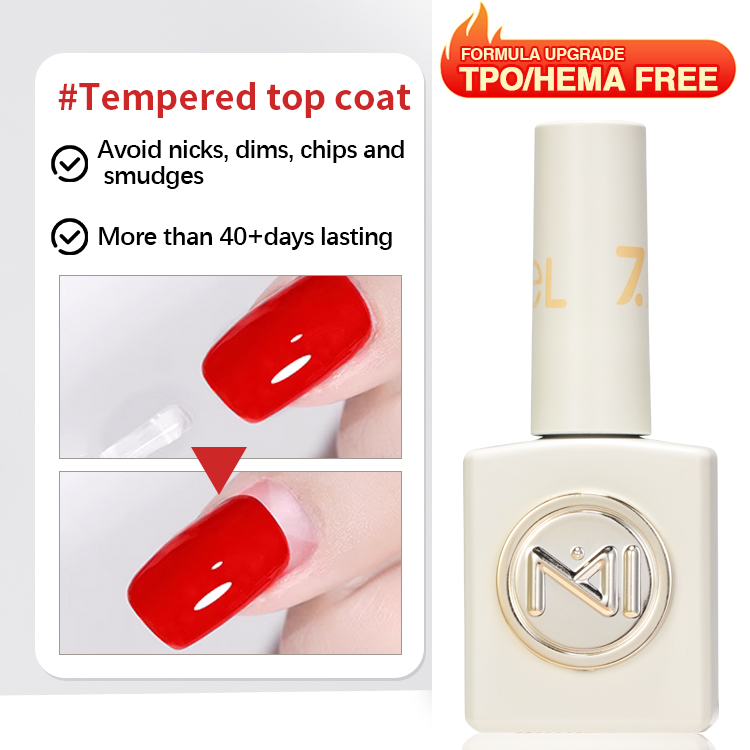
Super Shining Top Coat
A super-shining top coat is intended to create a highly glossy finish. It may be suitable for classic salon manicures, bright colors, dark shades, and designs where a glass-like appearance is preferred.
What buyers should check:
Initial gloss after proper curing.
Whether the finish looks even across the nail.
How well the shine is maintained during normal wear.
Whether the product changes the appearance of the underlying color.
Whether the formula is easy to apply without flooding the surrounding skin.
A high-gloss finish can be an important product option for salons and brands serving customers who prefer a clean, polished appearance.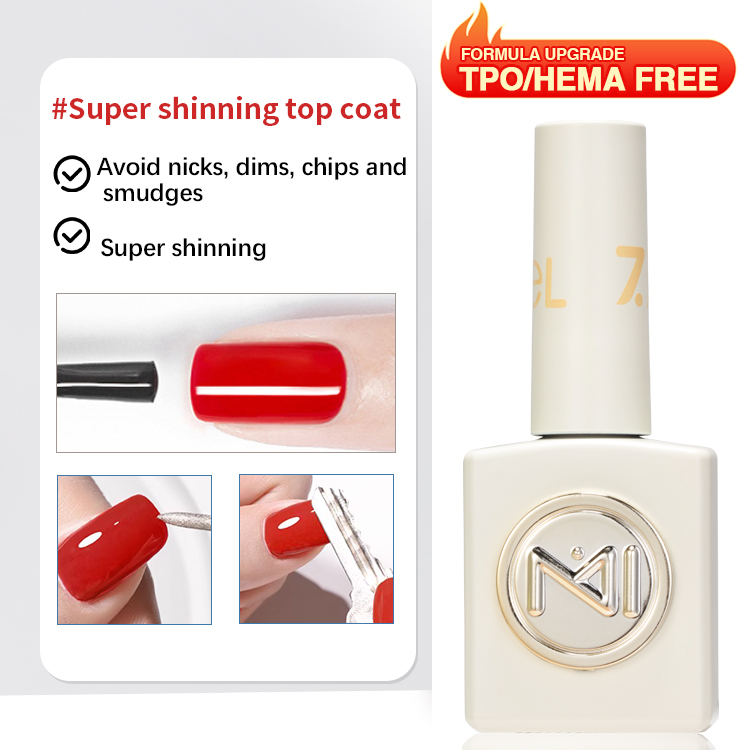
3. Top Coat Comparison at a Glance
| Top coat type | Main purpose | Key evaluation point |
|---|---|---|
| Matte Top Coat | Creates a matte finish | Evenness of the matte effect |
| Diamond Shining Top Coat | Creates a bright, reflective finish | Clarity and shine |
| No-Wipe Top Coat | Finishes the manicure without a separate cleansing step when properly cured | Curing performance and compatibility |
| No-Wipe Top Coat Pro | A professional-positioned no-wipe option | Verified differences from the standard version |
| Tempered Top Coat | A specialized finish with manufacturer-defined performance claims | Confirmed hardness or wear performance |
| Super Shining Top Coat | Creates a highly glossy finish | Gloss level and shine retention |
These descriptions are general buying guidelines. The exact characteristics of each product depend on its formulation and the manufacturer's specifications.
4. How Should Buyers Test Top Coats Before Placing a Bulk Order?
Product names and descriptions are useful starting points, but sample testing provides a more practical basis for comparison.
Before placing a large order, buyers can evaluate the following:
1. Application and viscosity
Check whether the top coat spreads smoothly, levels appropriately, and allows sufficient control during application. The preferred viscosity may differ according to the salon's working style and the intended nail design.
2. Finish and appearance
Apply each product over the same gel polish color and compare the finished surfaces under consistent lighting. For matte products, check the uniformity of the matte effect. For glossy products, compare clarity and reflectivity.
3. Curing performance
Follow the manufacturer's recommended curing instructions and use a compatible lamp. Do not assume that changing the curing time will solve every curing issue.
4. Compatibility
Test the top coat with the gel polish, base coat, and nail art products with which it is expected to be used. Observe whether the combination produces the intended finish and application result.
5. Wear performance
Evaluate the surface under realistic use conditions. Check for changes in shine, visible scratching, chipping, or other performance issues. Avoid relying on a single quick test to predict long-term wear.
6. Consistency between samples and bulk orders
For distributors and brands, repeatability matters. Ask how the manufacturer manages product specifications, batch identification, and quality checks so that future orders can be compared with approved samples.
Testing several top coats using the same procedure makes the results easier to compare and helps buyers select products based on actual performance.
5. What Should Distributors and Wholesalers Consider?
For distributors and wholesalers, choosing top coats also involves product assortment and customer demand.
A practical range may include a matte option, a standard no-wipe option, and one or more high-gloss finishes. Specialized products can then be added according to the needs of local salons and the market's preferred nail art styles.
Before purchasing, consider:
Which finishes are most relevant to your existing customers.
Whether the products have clear usage and curing instructions.
Whether the manufacturer can provide samples for evaluation.
Whether product quality and packaging remain consistent across repeat orders.
Whether the supplier can coordinate production and delivery for ongoing replenishment.
Whether the documentation available is appropriate for your destination market and intended sale.
A well-planned assortment can help buyers offer more choices without purchasing products that serve almost identical needs.
6. Choosing a Gel Polish Top Coat Manufacturer
The manufacturer's role extends beyond supplying bottles of finished product. For buyers who need repeat orders, reliable communication, clear specifications, and consistent production management are also important.
When evaluating a manufacturer, ask about its quality-control procedures, batch management, sample approval process, packaging checks, and arrangements for repeat production. These details help buyers understand how the supplier manages quality throughout the purchasing relationship.
Beyond The Peak manufactures gel polish products with factories in Guangzhou, China, and Vietnam. Its product range includes several top coat options, including Matte Top Coat, Diamond Shining Top Coat, No-Wipe Top Coat, No-Wipe Top Coat Pro, Tempered Top Coat, and Super Shining Top Coat.
For professional buyers, distributors, and nail brands, comparing samples and confirming product specifications are practical first steps toward selecting the right products for their market.
Conclusion
Different gel polish top coats serve different purposes. Matte top coats create a soft, non-glossy finish, while glossy options emphasize shine. No-wipe products can simplify the finishing process when used and cured correctly, and specialized products should be evaluated according to their stated performance.
The most suitable top coat is the one that matches the desired finish, performs consistently under the recommended conditions, and fits the needs of the target customer.
By comparing product specifications, testing samples, and evaluating the manufacturer's quality-management practices, buyers can make more informed purchasing decisions and build a more reliable gel polish product range.